
What Is Emotional Intelligence in Children?
Emotional intelligence (EQ) is the ability to:
- Recognize emotions
- Understand feelings
- Express emotions appropriately
- Manage reactions in different situations
For young children, this begins with simple recognition like knowing the difference between feeling happy and feeling upset.
Why Emotional Intelligence Matters for Kids
Teaching kids about emotions is one of the most important skills in early childhood development. Toddlers experience strong feelings but often lack the vocabulary or ways to express them.
Developing emotional intelligence for kids helps them:
- Build confidence and self-awareness
- Improve communication skills
- Develop empathy and social skills
- Handle stress and frustration effectively
When children learn to understand their emotions early, they are better prepared for school, friendships and life challenges.
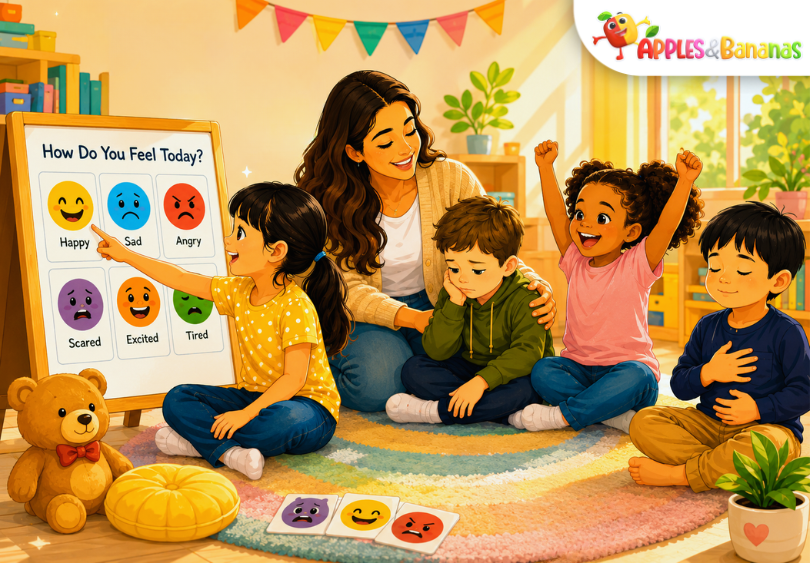
Teach Kids to Name Their Emotions
The foundation of emotional development in early childhood is helping kids identify what they feel. Teaching kids to name emotions improves emotional awareness and communication skills
Start with basic emotions:
- Happy
- Sad
- Angry
- Scared
- Excited
- Tired
Example:
“You look angry because your toy broke.”
“I can see you’re happy playing with your friends.”
Use Play-Based Emotional Learning Activities
Play is one of the best ways to teach social emotional learning for kids
Try:
- Emotion matching games
- Role-playing different feelings
- Storytelling with expressive characters
- Songs about emotions
Digital tools like Apples & Bananas enhance learning through interactive emotional development games, helping children learn while having fun.
Normalize All Emotions
A critical parenting strategy is teaching kids that all emotions are valid
Instead of saying:
- “Stop crying”
Say:
- “It’s okay to feel sad.”
- “I understand you’re upset.”
This approach builds emotional safety and trust, which is essential for healthy emotional growth.
Teach Simple Coping Skills for Kids
Once children recognize emotions, they need tools to manage them
Best Coping Skills for Kids:
- Deep Breathing: Teach “smell the flower, blow the candle”
- Creative Activities: Drawing, coloring or music for emotional expression
- Calm-Down Time: Encourage short breaks to reset emotions
- Comfort Objects: Hugging a toy or blanket provides security
These techniques improve emotional regulation in children and reduce tantrums and anxiety.
Model Healthy Emotional Behavior
Children learn by observing adults. Demonstrating emotional awareness helps reinforce learning
Examples:
- “I feel frustrated, so I’m taking a deep breath.”
- “I’m happy we are spending time together.”
This teaches children how to manage emotions in real life situations.
Encourage Daily Emotional Conversations
Make emotions part of everyday conversations
Ask:
- “How are you feeling today?”
- “What made you happy or sad?”
Daily check-ins strengthen parent-child bonding and improve emotional communication.
Create Consistent Emotional Learning Routines
Consistency is key for early childhood emotional development
You can:
- Use emotion charts
- Talk about feelings at bedtime
- Reflect on daily experiences
Small, consistent habits lead to long-term emotional growth.
How Apples & Bananas Helps Kids Learn Emotions
Apples & Bananas is designed to support emotional intelligence for kids aged 0–8 through fun, interactive learning.
Our app helps children:
- Recognize emotions through games
- Practice decision-making
- Build confidence and communication skills
By combining play with learning, children develop emotional skills naturally and effectively.
Raising Emotionally Strong Kids
Teaching kids about emotions is not just about feelings, it’s about preparing them for life.
When children learn to:
- Understand emotions
- Express feelings
- Use coping strategies
They become more confident, resilient, and socially aware. Start early, stay consistent and make learning fun.
More About Apples & Bananas
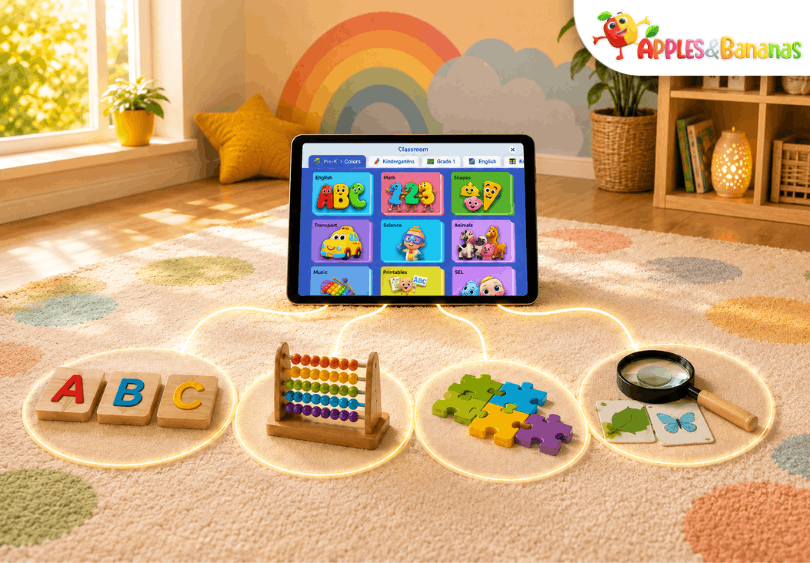
Apples & Bananas is an interactive learning app where kids can enjoy a variety of exciting games, engaging videos, nursery rhymes, songs, soothing lullabies, and much more. Every feature is thoughtfully created by experts to help children adapt to the ever-changing world, while having fun. We are COPPA compliant, ensuring a safe and secure environment where your child can learn and grow with confidence.
Download the app now and unlock a world where learning meets imagination.