I still remember the first time my daughter recognized her reflection in the mirror. She was barely a year old and she kept touching her nose, giggling as if she had discovered a new friend. That tiny moment was a reminder that learning doesn’t start at school. It begins long before that, from the way a baby listens, feels and explores the world around them.
Between birth and six years, a child’s brain grows faster than it ever will again; building millions of connections each second.
But what exactly should we teach during these early years? And in what order? Here’s a gentle roadmap, not a rulebook, to guide you through the incredible journey of teaching your little one.
0 to 1 Year: The Sensory and Emotional Foundation
At this stage, your baby doesn’t need flashcards or fancy toys. What they need most is you.
Cuddles, smiles, songs and the sound of your voice are their first lessons in love and trust. This is when their emotional foundation is built and that foundation supports everything else that follows
How they learn:
- Through touch, sight and sound
- By recognizing faces and voices
- By watching your expressions and tone
What you can do:
- Sing lullabies and rhymes
- Play peekaboo and make silly faces
- Give them safe textures to explore like soft, rough, cool, warm
- Talk to them constantly, name objects, people and actions
Every time you say “Mama,” “Ball,” or “Light,” you’re wiring their brain for language
1 to 2 Years: Exploration and First Words
Once they start walking, the world becomes their playground. Toddlers learn through motion; pushing, pulling, climbing and testing limits. This is also when their first real words begin to bloom. “Dog,” “car,” “no,” and “mine” become the soundtrack of your day
How they learn:
- Through imitation and repetition
- By exploring cause and effect (“If I drop this, what happens?”)
- By labelling and naming everything around them
What you can do:
- Read picture books together
- Play “Show me happy face!” or “Where’s your nose?”
- Sing action songs like If You’re Happy and You Know It
- Encourage pretend play like feeding a doll or driving a toy car
Your job isn’t to correct them, it’s to join their discoveries
2 to 3 Years: Early Thinking and Simple Concepts
Welcome to the age of “Why?”. Children at this stage begin connecting ideas, building early logic and expressing imagination. Their vocabulary grows rapidly and their curiosity is endless
How they learn:
- Through observation and conversation
- By sorting, matching and comparing
- By playing and pretending
What you can do:
- Sort objects by color or shape
- Play matching games
- Count snacks or toys
- Create simple stories together
Don’t worry if they ask “why” 37 times in a row. Those endless “whys” are how they build their understanding of everything around them
3 to 4 Years: Building Pre-Academic Skills
This is when preschool begins to make sense and your child starts building the skills that will lead to reading, writing and math later on, but remember, learning should still feel like play.
How they learn:
- Through exploration and hands-on activities
- By listening to stories and following directions
- Through repetition and routine
What you can do:
- Encourage tracing letters and shapes in sand or air
- Sing alphabet and counting songs
- Play “big vs. small” or “hot vs. cold” games
- Build towers, patterns and simple puzzles
At this stage, every scribble and tower block is the beginning of structured thinking
4 to 5 Years: Early Literacy and Numeracy
This is the bridge between play and academics when letters, sounds and numbers start coming together. Your child starts recognizing that symbols have meaning that letters form words and numbers represent quantities
How they learn:
- By connecting visual patterns (letters, shapes, numbers)
- Through rhythm, rhyme and repetition
- Through real-life examples
What you can do:
- Play sound games (“What starts with ‘b’?”)
- Introduce sight words like me, the, is
- Count objects during snack time or walks
- Read short, colorful stories together
It’s not about forcing reading early it’s about building the joy of discovery
5 to 6 Years: Ready for School and the World
This is when learning becomes more intentional. Your child starts reading small sentences, writing simple words and solving problems. They also begin to understand emotions, theirs and others’
How they learn:
- Through structured play and real-world connection
- By combining reasoning with imagination
- By social interaction and teamwork
What you can do:
- Encourage early reading with simple storybooks
- Help them write their name and short words
- Explore basic science; floating, sinking, magnets
- Play board games to teach patience and taking turns
You’re not just preparing them for school you’re preparing them for life
A Gentle Reminder for Parents and Educators
The early years aren’t a race. There’s no finish line to cross by six. Each child blooms at their own pace and the best kind of teaching happens when curiosity leads the way. Talk, play, sing and explore. Teach less by force and more by wonder
Just Remember
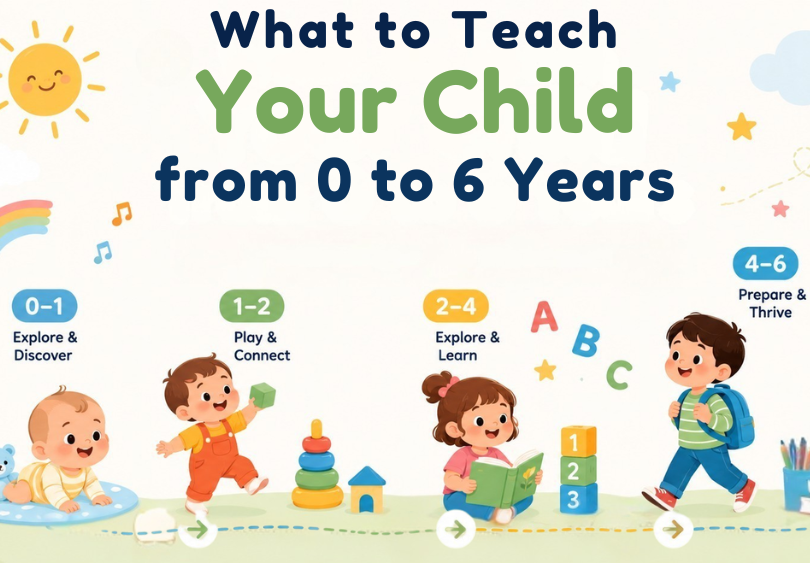
0–2 years: Connect through senses and emotions
2–4 years: Build language, thinking and imagination
4–6 years: Strengthen literacy, numeracy and readiness
Follow this natural rhythm and you’ll raise not just a smart child but a joyful learner
More About Apples & Bananas
Apples & Bananas is an interactive learning app where kids can enjoy a variety of exciting games, engaging videos, nursery rhymes, songs, soothing lullabies, and much more. Every feature is thoughtfully created by experts to help children adapt to the ever-changing world, while having fun. We are COPPA compliant, ensuring a safe and secure environment where your child can learn and grow with confidence.
Download the app now and unlock a world where learning meets imagination.